Sunday, January 22, 2012

Live over 100yrs

After beginning my raw food journey in July 2011, and researching on the topic daily, I came across so many amazing inspirational people!  One of them being Bernando LaPallo. I have videos of him linked to my Raw Living page, and a mention in my Who Inspire Me page. 

Tell someone you're over 100 years old, and they might assume the worst right away, guessing that you have a dozen medication bottles next to the bed and that your health is quickly deteriorating. How could it be that a man who's going on 111 and taking no medication, who simply eats fresh vegetables, olive oil, honey, cinnamon, garlic and chocolate, can bounce around his kitchen like he's half his age?

When Bernando LaPallo of Mesa, Arizona tells his secrets of longevity and vitality, your jaw drops to the ground, wondering how he avoided all of the "ABCD's" of those "senior years" - you know, Alzheimer's, brittle bones, cancer and/or diabetes. Could it be that Western Medicine has it all wrong, and all we ever needed were raw veggies, super-foods, raw nuts and berries, and some barley soup? Maybe Medicare and Medicaid should broker a deal with the makers of power juicers and call it "Universal Healthcare."

This August, 2012, Bernando LaPallo will turn 111 years of age, and he still has no problem walking at least a mile daily and receiving phone calls from people all around the world who want to hear how he's done it, and how to make their own lives better. This author and role model keeps it so simple, you don't need a recipe book or health guide to live to be 110 or better.

Here's the (fountain of youth) breakdown and just a few of the raw food "natural medicines" you can turn into your own daily regimen, so your mind, body, and spirit can thrive well into triple digits:

• High quality, organic, cold-pressed extra virgin olive oil: use on the skin as lotion; use as salad dressing; known to lessen risks of colon cancer and heart disease. The moment I heard him say he uses that I switched over, and it keeps my skin so silky smooth!

• Dark, organic chocolate: reduces stress; helps with depression; lowers blood pressure and cholesterol levels. I will never give up chocolate...so this is a vital part of my happy and healthy lifestyle:)

• Organic garlic: helps fight coughs and colds; considered nature's antibiotic; helps with digestion and intestinal problems. Not to mention it adds great flavor to foods!

• Organic cinnamon: antibacterial and antifungal; reduces proliferation of leukemia and lymphoma cancer cells.  It's great in hot cocoa too...I consume it daily.

• Organic honey: helps you lose weight; nature's energy booster; has antioxidant and antibacterial properties. You want to choose raw honey too...the less processed something is the better.

• Juice organic raw vegetables: A decent juicer costs less than $100. Don't fall for processed juice...you want it Fresh Squeezed.

And if you're not familiar with this style of turning fresh "veggies" into a drink, try these surprisingly tasty combinations: Carrot, cucumber, sweet potato, a quarter size slice of fresh ginger, and freshly squeezed lime.
Celery, kale, Granny Smith apple for sweetness, and of course lemon or lime juice.

Also, you don't have to let the vegetable pulp go to waste. Use it to enhance flavors in dishes or to bulk up your stew, or mix it with quinoa and maybe some diced onions as an accent.

Nature provides the untainted answer to building a strong vascular and immune system - one that can fight off infection, stress, arthritis, and even stave off the aging process. If you have not already, do further research into foods which are rich in antioxidants, enzymes, phyto-nutrients, and be sure to research foods that detoxify your body and destroy free radicals.

Eat right, exercise, don't be fooled by the pharmaceutical and medical myths and scams, and you might just be fortunate enough to live long and prosper, like Bernando LaPallo. You know what they say, "Where there's a will, there's a way."

I plan to live to be over 100 years old...granted I don't have any accidents...but a healthy lifestyle will get me there!

Saturday, January 21, 2012

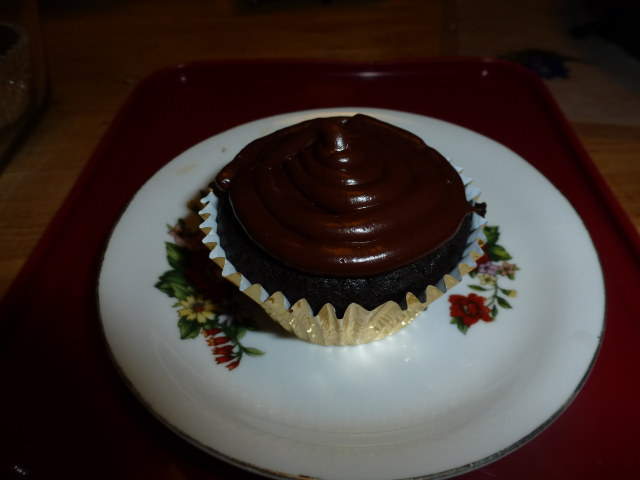
Gluten/Dairy Free chocolate cupcakes

Finally an occasion to bake the gluten free, dairy free dark chocolate cake I purchased from Pure Pantry!  To celebrate my sister's 30th birthday I baked these for her...and they turned out wonderfully!  I decided cupcakes were more fun and portable than a whole cake.    

Ingredients:
Chocolate Cupcakes:
1 package wholegrain Dark Chocolate Cake Mix from The Pure Pantry (mix is Free of gluten, refined sugar, dairy, soy , nuts and eggs)
3 large organic eggs
1 cup unsweetened almond milk
1/2 cup melted coconut oil
1 cup filtered hot water

Icing:
1/3 cup dairy free non-hydrogenated butter flavored shortening (Organic Spectrum)
1/2 cup raw agave nectar
1 cup raw cacao powder
1 tsp vanilla
2 tsp almond milk

Recipe:
Chocolate Cupcakes:
Preheat over to 350 degrees.  
Place the cake mix in a bowl.  
In a small bowl blend together the eggs, almond milk and coconut oil. 
Pour mixture into cake mix bowl and blend to combine.
Add hot water to cake mix and blend until combined. 
Pour batter into cupcake cups about 3/4 full, and bake for about 28 minutes. (Check middle cupcake with a toothpick after 20   minutes. My oven needed the extra 8 minutes. When toothpick comes out clean...unless you add chocolate chips...then they are ready! Stab cupcakes in different areas if you do add chocolate chips to make sure the batter is actually done, and the melty stuff you see on the toothpick is indeed a chocolate chip.)

Icing:
With an electric mixer, blend the Spectrum Shortening until smooth. Add agave nectar and mix until well blended.
Sift in cocoa powder and blend on low speed.
Add vanilla.
Add one teaspoon of almond milk, and another if it's still seems too dry (I added 2 tsp).
I then added the ready icing to a plastic bag and cut off the tip to swirl on the cup cakes. They were Delicious!! 


 All ingredients for Cupcakes and icing.  Not pictured is the Agave Nectar...shown below.
Blended wet ingredients for cupcakes
Mix wet ingredients with cake mix
 Blend...then blend in hot water
Mixed batter is ready and smooth
Pour into cupcake cups...then stick in the over for 20-28 minutes)
 All ingredients for the gluten free dairy free icing
Blend Spectrum shortening until soft
 Add in the Agave Nectar and blend until mixed
Sift in the cocoa powder
Blend...then add in 1-2 tsp of almond milk
 Icing is ready!
Swirl icing on cupcake
Ready to eat! Soo yummy hot!
Had to save the rest for my sister's birthday part.

Friday, January 20, 2012

The 4 Most Addictive Foods

Brain Hijackers: The 4 Most Addictive Foods


By Neal D. Barnard, MD
Adjunct Associate Professor of Medicine at the George Washington University School of Medicine
President of the Physicians Committee for Responsible Medicine in Washington, DC


Can foods be addictive? So many of us ask exactly that question when a sugary doughnut or a gooey cheese pizza call to us so insistently. Scientists have debated the question, too. Some hold that certain foods really do behave like addictive drugs, while others give foods a not-guilty verdict, saying that overeating is simply an emotional problem. But once we gained the ability to understand what is actually happening inside the brain, we gained a whole new perspective.

Here’s what we’ve learned: When sugar hits your tongue, it triggers the release of feel-good chemicals in the brain in the same way that intense exercise triggers the “runner’s high.” Like weak versions of heroin or morphine, these natural opiates can get you hooked on whatever food triggered them. That’s exactly what sugar does. As sugar touches your taste buds, it sends nerve impulses to the brain, triggers the release of opiates, and makes you want to come back for more. And more powerful than pure sugar is the combination of sugar and fat. Think of the mixture of sugar and butter or shortening in a cookie, cake or pie. They tend to call to us much more than sugar itself.

Chocolate is similar, as University of Michigan researchers proved, using the medication naloxone. Normally, this drug is used to treat heroin overdose, because it stops heroin from attaching to receptors on brain cells. The research team gave naloxone, not to heroin addicts, but to chocolate lovers – people who really tended to binge on chocolate. After infusing the drug intravenously, the researchers offered a tray of chocolate candies. It turned out that chocolate had lost much of its appeal, showing that the lure of chocolate is not all taste and mouth-feel. Rather, chocolate hijacks your brain chemistry, triggering the same receptors that heroin affects, and when researchers block that brain effect with naloxone, much of chocolate’s attraction is gone.

We can now clearly say that both sugar and chocolate have powerful effects on brain chemistry. But apples, bananas, oranges and a cool summer salad – tasty though they may be – do not. Let’s face it, no one ever went to a convenience store at nine at night to buy an apple. We go there for junk food.   

Could meat be similar? When you hear a man say, “I’d rather die than give up my grill,” it starts to sound like he’s hooked. And, indeed, British researchers found that opiate-blocking drugs reduce the desire for meat, just as they do for chocolate, showing that the desire for meat comes at least in part, from its effect on the brain.

Cheese is a special case. Yes, it’s about 70 percent fat, loaded with cholesterol and sodium, and smells like old socks. But many people are absolutely hooked on it, calories and all.

Here’s why: the main protein in milk and cheese is called casein. As you digest casein, it breaks apart to release opiates, called casomorphins – that is, casein-derived morphine-like chemicals. Shortly after you swallow a bite of cheese pizza, these chemicals enter your bloodstream and pass to your brain and attach to your opiate receptors.

Casomorphins’ natural function, presumably, is to provide a bit of feel-good sensation to a nursing calf. And because a calf is weaned very soon, the fat, cholesterol and sodium in milk products are not a problem. But humans who get hooked on these same compounds can easily run into trouble as the years go by.  


So, which foods affect the brain and are potentially addicting? Science suggests that there are four: sugar, chocolate, meat and cheese. The next question is, does it matter? I would argue that, if you’re having just the occasional taste of sugar or chocolate, it does not matter. But if your waistline is expanding before your very eyes or you’ve developed health problems, it’s time to take it seriously.

If you’re in that situation, you will very likely find it easier to avoid teasing yourself with even small amounts of an addicting food. Just as smokers find it is easier to quit, rather than to try to moderate tobacco use, the same seems to be true of food.

When you’re trying to break any habit, it pays to get plenty of rest, exercise regularly so you feel your best, and ask your friends or family to not tempt you with whatever you’re trying to break away from. Many, many people have set aside unhealthful foods, and they end up feeling so much better as a result


Thursday, January 19, 2012

Food Adiction

Food Addiction: Fact or Fiction?

From my experience and opinion...it's an emotional addiction.  Not quite a chemical addiction like a drug that would physically put you through withdrawal, but we remember how yummy something is and just want more of that pleasure! Over the years I have gone through many stages of craving certain foods so strongly that I can't go a single day without them until I break that addiction by making it not available, or through bursts of will power. I find this article very interesting as it discusses food addiction. 

By Keri Gans, MS, RD, CDN. Gans is a registered dietitian, past spokesperson for The Academy of Nutrition and Dietetics, and author of The Small Change Diet. Gans has a private practice in New York City where she specializes in weight management. 


Can a person be addicted to food? Does our body go through physiological withdrawal the same as it would for drugs and alcohol when a person stops eating a particular food item? In order to answer these questions, I exhaustively searched for conclusive science-based evidence, but unfortunately wound up pretty much empty-handed. So, I am going with my opinion here, basing it on my over 12 years of experience in private practice, working with hundreds and hundreds of people.

I claim that – no – you cannot be addicted to food, but you can have behavioral and emotional reasons that cause you to overeat. Our body needs food for survival, which is definitely not the case for drugs and alcohol. I think claiming you are addicted in some instances is taking the easy way out, basically saying that it is beyond your control. Are there really certain foods that a person really cannot stop eating from the moment they are born? Or for some reason did this develop over time? What came first the chicken or the egg?

For example, a patient of mine who came to see me for “food addiction” reported that she grew up in a household with foods labeled as “good” or “bad.” No cookies, cakes or candy were ever allowed in her home. As she got older, she found that whenever she ate cookies or cake, she couldn’t have just one piece. Is she truly addicted or simply never learned to incorporate these foods in a healthy manner into her diet? We worked together so she could learn a new behavior, giving herself permission to eat these so-called “bad foods” – instead of feeling guilty. Once she stopped totally depriving herself, she was able to start enjoying the food in a healthy manner. Now, if she had been an alcoholic or drug addict, there is no way possible she could start enjoying just a little amount. With a true addiction, abstinence is almost always the only answer.

Our emotions and the effect they have on us are a very important part of this issue and cannot be overlooked. At a very young age, our intake of food and our emotions start becoming intertwined. How many small children are given ice cream as comfort when they are crying or a cupcake because they were “good” and deserve a reward? Then, when you get older and you are feeling sad, stressed or angry, would it not make sense that you would reach for these same foods? They are familiar to you; the problem is that you might actually use these foods to cover up your actual feelings. Instead of focusing on what is bothering you, you hide behind a couple of cookies and then some.

A technique I like to use with my patients that is very appropriate here is "HALT": Ask yourself, am I Hungry, Angry, Lonely or Tired? Determining what is really going on in your mind will help you to determine if food is really what you want. Learning new skills on how to deal with these emotions without using food can be really rewarding.

Another interesting factor, as it relates to food and addiction, is that many of the patients that come to my office claiming food addiction do not have overall healthy habits. They skip meals, engage in little physical activity, and do not get enough sleep. The longer we work together, incorporating small changes weekly to improve their behaviors, the less they complain of food addiction.

The following are 10 tips that my patients have found to be very helpful in controlling their overeating: 

  1. Do not skip meals. Eat breakfast, lunch and dinner. Include snacks if going more than 4-5 hours without a meal.
  2. All meals and snacks should include adequate protein.
  3. Choose whole grains (i.e. oats, barley, quinoa, 100% whole wheat, buckwheat) instead of white flour.
  4. Make sure to include fruit and/or veggies with all meals.
  5. Plan ahead for the week. Go food shopping regularly and stock your home with healthy food options.
  6. Start a food journal. Record meal times and all food/beverages consumed.
  7. Get moving. Join a gym, try a Zumba class, roll out a yoga mat, or simply walk more.
  8. Go to bed earlier and get those zzz’s.
  9. Stop categorizing foods into “good” or “bad.” Just focus on making better choices.
  10. Don’t think of food as a reward or treat. Reward yourself with a massage, manicure, a movie with a friend, a new pair of shoes, or simply a pat on the back.
Regardless of whether we can all agree on food addiction being fact or fiction, in the end, it is not the main issue. What is important is that we can agree that obesity and overeating are a problem in our country and that we all should do our part in eating better and maintaining a healthy body weight.

For some of you, every tip in the book might not help you stop overeating a certain food. My advice: Don’t buy that food to begin with – you can’t overeat something that is not in front of you.


**look for my follow up blog on this topic tomorrow on Brain Hijackers: an article discussing The 4 Most Addictive Foods**

Wednesday, January 18, 2012

Protest of the Stop Online Piracy Act (SOPA)

This will hugely effect how we educate the masses! 
Including how I will be able to share info on my blog!

At midnight tonight, Wikipedia will go black in protest of the Stop Online Piracy Act (SOPA) and Protect IP Act (PIPA), two anti-piracy bills that have Internet companies up in arms over the future of the medium.

The bills, meant to chasten overseas torrent sites like The Pirate Bay into compliance, have many concerned that it might open the door to future Internet censorship and abuse. Last month, founders at top tech firms like Google, Twitter, Yahoo, and eBay joined together to express their misgivings about the broadly written legislation.

Wikipedia is the largest site yet to take part in the January 18 protest, joining Reddit and the popular Cheezburger network in the plan to go off-line.

"We've all had the good fortune to found Internet companies and nonprofits in a regulatory climate that promotes entrepreneurship, innovation, the creation of content and free expression online," they wrote in an open letter of opposition. "However, we're worried that the PROTECT IP Act and the Stop Online Piracy Act—which started out as well-meaning efforts to control piracy online—will undermine that framework."

Wikipedia is the largest site yet to take part in the January 18 protest, joining Reddit and the popular Cheezburger network in the plan to go off-line. Mozilla, maker of popular Internet browser Firefox, launched their own campaign in the fall, and nonprofit Fight for the Future has an online petition that supporters can sign and send to their congressperson.
Although microblogging site Twitter signed last month's letter of opposition, CEO Dick Costolo said over the weekend that the site would not be joining the blackout. "That's just silly. Closing a global business in reaction to single-issue national politics is foolish," tweeted Costolo after a journalist asked whether Twitter, Facebook, or Google would have the "cojones" to go dark tomorrow.

Tuesday, January 17, 2012

48 hr cleanse

I shared how I detoxified my body in the beginning of the year. Here is a plan shared by Dr. Oz for a 48 hour detox. It's very similar to what I did.

The practice of detoxifying the body to rid it of unhealthy toxins has been around for centuries. Hippocrates recommended fasting to improve health, and many religious groups have historically used fasting as a way of purifying the spirit.

Today the marketplace is cluttered with detox diets that promise to help you lose weight, boost your energy levels and more. However, many popular detox diets, especially those that involve extreme low-calorie fasting, can rob the body of important nutrients and place the body in starvation mode, which actually slows your metabolism. Other downsides of many detox diets include: dehydration, fatigue, dizziness, nausea and even colon damage.

The Body’s Detox System
Oftentimes people don’t realize that the body has its own extraordinary internal detoxification system. Here’s a brief look at three critical organs involved:

  • The Liver: Your first line of defense against toxins is your liver, which acts like a filter in preventing toxic substances contained in foods from passing into your blood stream.
  • The Colon: This organ has bacteria that produce both healthy and unhealthy chemicals. You want to keep your colon flowing regularly since its main role is to flush out toxic chemicals before they can do you any harm.   
  • The Kidneys: Like clockwork, the kidneys are constantly filtering your blood and getting rid of toxins in the form of urine.
For a detox diet to truly work, you need to maintain these three key organs by nourishing your body with the right nutrients. Dr. Oz’s 48-Hour Weekend Cleanse is based upon eating certain “detoxifying” foods that will keep these systems running smoothly. The plan couldn’t be simpler to follow so you’re not always focused on what to eat next. You'll need to prepare and eat the following meals and snacks two days in a row. To get ready for the weekend cleanse, print out the complete cleanse shopping list and make a trip to the supermarket. Click here for the shopping list. 

Dr. Oz’s 48-Hour Weekend Cleanse


Breakfast: Quinoa With Prunes
Start your morning off with a bowl of quinoa; this healthy whole grain is also a complete protein, and it’s high in phosphorus and fiber. Top it with prunes; they’re high in fiber and sorbitol, a chemical that acts like a laxative.

Ingredients
1/2 cup quinoa, rinsed
1 cup water
1 pinch nutmeg
1 tsp grated ginger
1 tbsp flax seed oil
1/3 cup chopped prunes
1/4 cup rice milk

Click here for the complete recipe. 

Snack Items: Detox Drinks
Enjoy these healthy pick-me-ups in between meals throughout the day.

Kale, Pineapple and Ginger Detox Drink (Juicer required)
This purifying beverage contains kale to cleanse the kidneys; pineapple, which has bromelain to aid digestion; and ginger to help stimulate bile flow in your gall bladder.

Ingredients
1/2 cup pineapple
2 large cucumbers
1 bunch kale without stems (4 cups chopped)
1/2 lemon, squeezed
1/4 inch of ginger
1 bunch of mint (1/2 cup)

Pineapple, Lemon and Pomegranate Blend-Free Detox Drink
If you don’t have a juicer to make the first drink, mix up this easy detox concoction with ready-made juices and cut with water.

Ingredients
3/4 cup unsweetened pineapple juice
1 lemon
1 cup unsweetened pomegranate juice
3 cups water

Click here for the complete juice recipes.

Alternate: Veggie Snack
Slice and mix together celery, radishes and cucumber, or any assortment of fresh vegetables. Dress with olive oil, lemon juice, salt and pepper. Put this crunchy cleansing treat in plastic baggies or a portable container so you can take it with you on the run. You can have as much of this snack as you want throughout the day.
Lunch: Fruit Smoothie
In a blender, whip up a nourishing smoothie that contains blueberries, loaded with quercetin, a flavonoid that boosts immunity and is good for your liver; bananas, full of vitamin B6, an essential vitamin for liver detoxification; and ground flaxseed, packed with brain-nourishing omega-3s and fiber for healthy elimination.

Ingredients
½ cup almond or hemp milk (plain/unsweetened)
1 tablespoon ground flaxseed or chia
¼ cup frozen blueberries
¼ banana
½ cup ice

Combine all ingredients in a blender. Blend until smooth.    

Dinner: Vegetable Broth Soup
This purifying broth contains fennel to help bile flow in your gallbladder; garlic to help with liver and gall bladder function; cabbage, excellent for detoxification in both the liver and kidneys; and shitake mushrooms to boost liver enzymes. Serve soup with a side of sauerkraut with sliced apples. Sauerkraut contains probiotics, the good bacteria that protect your GI tract. Make sure to use traditionally fermented sauerkraut to get the greatest health benefits. Apples boost both kidney and liver function.

Vegetable Broth Ingredients
2 red onions, roughly chopped
2 stalks celery, roughly chopped
1 fennel bulb, fronds and stalks included, roughly chopped
2 tsp caraway seeds
2 tsp sea salt
Freshly ground pepper
1 cup sliced shitake caps
4 large cloves garlic, chopped
1 cabbage, roughly chopped
2 quarts water
2 tbsp paprika
2 tbsp fresh oregano, chopped
8 sprigs parsley, chopped stems and leaves
1/2 cup parsley, chopped

Click here for the complete recipe. 

To get the most out of Dr. Oz’s 48-Hour Weeekend Cleanse, be sure to follow these rules:

  • No Eating After 7 p.m.
  • Take an Epsom Salt Bath: This therapeutic bath will help you sweat out toxins and also contains magnesium to relax your muscles as well.
  • Dandelion Root Tea: Before bed, enjoy a cup of dandelion root tea, an excellent way for your liver to excrete toxins from your body.

Bonus: More Foods to Boost Your Body’s Detox Systems

The Liver

  • Dark berries such as blueberries and blackberries will make it easier for your liver to get rid of certain toxins.
  • Hot peppers have capsaicin, which boosts enzymes responsible for detoxifying the liver. As a rule, the hotter the pepper, the more capsaicin.

The Colon

  • Whole grains contain phosphorous, a natural laxative, and fiber to help bulk up your stools.
  • Fermented foods like kimchi (Korean spicy pickled cabbage) and sour pickles are packed with probiotics, the good bacteria that help protect your colon.

The Kidneys

  • Fermented Soy products such as miso, all act like diuretics, allowing you to urinate more often.
  • Cruciferous vegetables such as cauliflower, bok choy and broccoli increase your kidney’s ability to transport toxins into the urine and help liver cells recover from detox.


Monday, January 16, 2012

Alternative Health Trends for 2012

Here are some things to look forward to in the year 2012 in Alternative Medicine, as Dr. Oz explores some of them. 

Dr. Oz went on a search for the next big things in alternative medicine. Learn about the three cutting-edge treatments and supplements you need to look out for in 2012 so you can take better – and smarter – care of your health.

The Next Big Thing for Pain Relief: Moxibustion
Information provided by Jamie Starkey, Lac, Lead Acupuncturist, Center for Integrative Medicine, Wellness Institute, Cleveland Clinic

Moxibustion is an acupuncture technique involving moxa, the herb mugwort (Artemisia vulgaris). In Traditional Chinese Medicine (TCM), this herb is used to invigorate the flow of Qi and blood, promote a pain-relieving effect, and deeply penetrate the area of discomfort with soothing warmth. Qi takes on various roles in our body. For example, it is the energy that keeps us from falling ill, the energy that forces our heart to beat, or cells to divide. In TCM, Qi is a moving force that travels along pathways in the body noted as meridians. When Qi is flowing without obstruction or without deficiency, we are in a perfect state of health and wellness. It is the moment an imbalance occurs, that we begin to fall ill and manifest in various symptoms of disharmony. 

In moxibustion, the moxa herb is lit on fire and can either be placed on top of the needle (Needle Moxa); applied without the use of needles, as it can be burned in stick form as the acupuncturist hovers and swirls the stick of burning moxa above various acupuncture points; or the moxa can be indirectly placed on various acupoints on the body using a thin slice of ginger or other barrier to shield the skin. Moxibustion is particularly effective for cases like tight muscle spasms, low back pain, frozen shoulder, or various osteoarthritic joint pains, especially when pain is worsened by damp and cold weather.


The next big thing for 2012 is “at-home moxibustion”. All you need is the moxa herb (mugwort), a spray bottle and a heating pad. Spray the herbal extract onto the problem area and apply the heating pad fro about 30 minutes to alleviate muscle pain and cramps.

The Next Big Anti-Ager: Ubiqinol
Information provided by Pina LoGiudice ND, LAc and Peter Bongiorno ND, Lac, Directors of Inner Source Health

Naturally produced in our bodies, ubiquinol is an active form of Coenzyme Q10 (CoQ10), which has been shown to have quite powerful antioxidant potential. First discovered in the 1950s, CoQ10 is known to help many of the diseases associated with aging. Although CoQ10 can be found in foods such as meat and fish, its content in them is very low.

In our practice, we have found clear benefits supplementing with ubiquinol for issues of heart disease, blood pressure, gum and oral health, and even nervous system challenges.

Every cell in the body is in the business of producing energy to keep you vital and healthy. The energy each cell produces is in the form of a molecule called ATP. This ATP is made in the “energy powerhouse” of the cell called the mitochondria. Ubiquinol has been shown to promote ATP production in the mitochondrial inner membrane.

From moment to moment, we are burning energy and aging. As a result, free radicals are produced in our body which will damage all cells, including vessel walls, nerve tissue, and the linings of our organs. Also, environmental toxins that enter into our body can also cause damage and increase oxidant levels allowing a further break down of our body’s cells and repair mechanisms.

Ubiquinol does not only help support your body’s energy production, but it also is considered one of the strongest antioxidants available. It has the ability to protect your body's cells from damage caused by oxidative stress and free radicals by sopping up the oxidants causing the damage. Removing oxidant attack allows your body to repair and restore health.


The Next Big Thing for Blood Pressure: Bonito Peptide Supplements
Information provided by Bryce Wylde, Bsc, RNC, DHMHS, Alternative Medicine Expert and Host "Wylde on Health"

Approximately 20% of North Americans have high blood pressure, or hypertension. Hypertension is a serious condition in which increased blood flow exerts undue pressure and stress against the walls of the blood vessels. As the most common primary diagnosis in the US, hypertension accounts for more than 35 million physician office visits per year. Uncontrolled hypertension can lead to an increased risk of serious health conditions, including congestive heart failure, heart attack, stroke, atherosclerosis, brain damage, vision loss, and kidney failure among other things.

The typical mindset is that we aren’t worried until we have a blood pressure reading high enough that our physician is required to react by intervening with prescription medication. But with a blood pressure cuff in every pharmacy these days and all of the available information on how to achieve and maintain ideal body weight and composition through diet, lifestyle and exercise, we need to start taking the responsibility upon ourselves to keep and maintain optimal blood pressure. You don’t want to resort to prescription medication when recent research shows that only 34% of individuals with hypertension respond favorably to drug treatment.

When prescription medications are required, the way some of them work is to inhibit the activity of an enzyme called angiotensin converting enzyme (ACE) and they have been shown to lower blood pressure effectively and be relatively safe. But they can be accompanied by numerous side effects, including dry cough, dizziness lightheadedness, headaches, and impotence. As a result, individuals with high blood pressure have turned to natural alternatives known to lower blood pressure, such as increasing exercise, decreasing stress, implementing favorable dietary modifications, and integrating dietary supplements into their daily regimen.

An effective natural supplement to consider is the extract of the Bonito fish. Bonito (Sarda orientalis) is a fish belonging to the tuna and mackerel family that is traditionally consumed in Japan. Japanese researchers have identified a patented process to isolate specific active bonito peptides (separated proteins) with demonstrated blood pressure-lowering effects in animals and humans. These peptides – not to be confused with fish oils – work similarly to ACE inhibitor drugs but without the side effects.

Bonito peptides provide safe, effective and natural blood pressure support for individuals with pre-hypertension (systolic blood pressure: 120-139 mm Hg; diastolic blood pressure: 80-89 mm Hg) or Stage I hypertension (systolic blood pressure: 140-159 mm Hg; diastolic blood pressure: 90-99 mm Hg). In fact, there are already three human clinical trials that have been successfully conducted using bonito peptides in subjects with borderline or mild hypertension. In a recent study, researchers used an optimized bonito peptide mixture of 1.5 grams daily.

Clinical trial research suggests that bonito peptides are approximately 64% effective in reducing blood pressure in borderline and mildly hypertensive subjects. In these short-term clinical trials, no adverse side effects were reported, suggesting that bonito peptides have an excellent safety profile.

If you are experiencing mild to moderate high blood pressure, talk to your family doctor about bonito peptides along with lifestyle modification to see if this type of natural approach may be right for you.