Showing posts with label AVOID. Show all posts

Wednesday, January 21, 2015

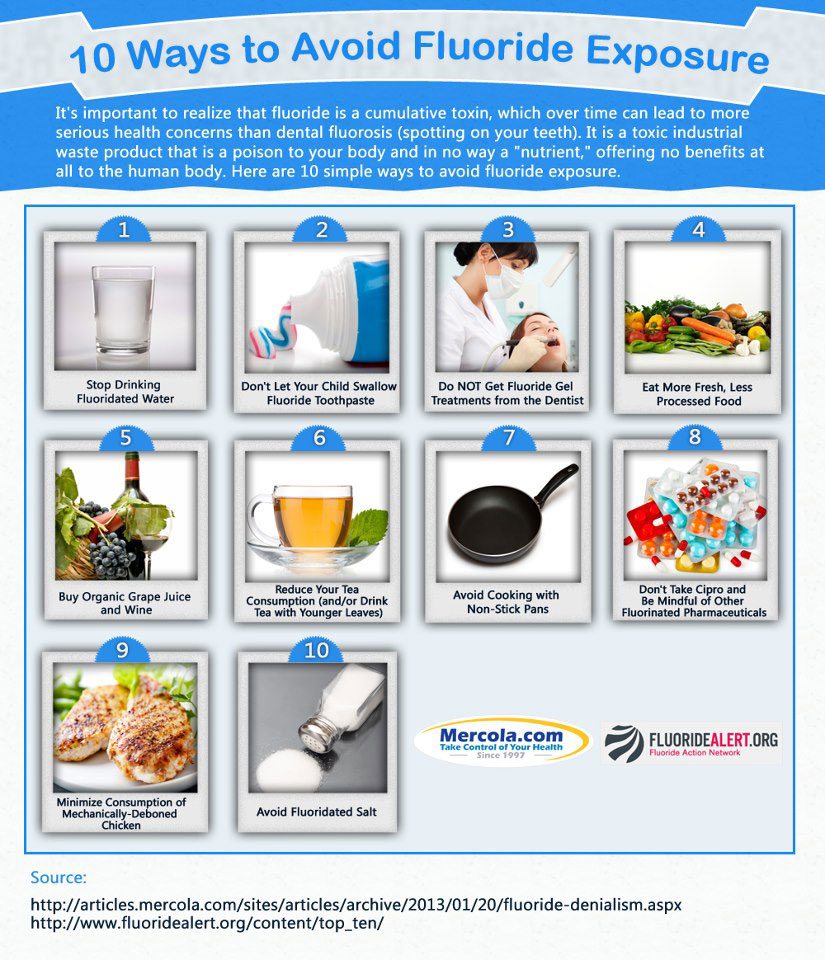
10 ways to avoid Fluoride Exposure

Ways to Avoid Fluoride Exposure Infographic

Ways to Avoid Fluoride Exposure

Fluoride is a toxic industrial waste product – it is a poison, and is in no way a "nutrient," as it does not offer any benefits to the human body. Yet, this damaging compound is being added to your water supply, exposing you to potential dangers every day.

But here's what's more disturbing: fluoride is found not only in your drinking water, but also in other seemingly harmless products, some which are found inside your home. And if you're not careful, exposure to these fluoride-containing products can reach very toxic levels, exposing you to a wide-range of serious health problems such as damage to your bones, your brain, and your endocrine system.

Read this infographic "10 Ways to Avoid Fluoride Exposure," and discover fluoride-containing products you should avoid. Feel free to share this information with your loved ones.

Read this infographic "10 Ways to Avoid Fluoride Exposure", and find out which products found inside and outside your home contain this damaging neurotoxin. Use the embed code to share it on your website or visit our infographic page for the high-res version.

Saturday, January 17, 2015

One Stretch To Avoid

 
I've long recommended avoiding vigorous stretching first thing in the morning; the risk of injury is significant, especially as we get older, as our muscles, tendons, and ligaments are not well perfused with blood when we first wake up. These tissues are best stretched after we have been out and about for an hour or two, and optimally, after enough of an aerobic workout where we are sweating - if we've worked hard enough to sweat, we can reasonably assume that our muscles and ligaments are flush with blood and ready to be safely and effectively lengthened through stretching. 

One stretch in particular that I have found to be quite dangerous to lower back health is forward bending where your legs are pressed together on the ground in front of you, and you lower your chest to get as close as possible to your knees. Some people use this position to stretch their hamstrings, others to stretch their lower back. Regardless of which muscles you are targeting, you should know that this stretch puts significant pressure on the discs that act as shock absorbers between the vertebrae in your lower spine. 

Bending straight forward where your chest approaches your thighs necessitates forward flexion of your lumbar spine, which tends to push your intervertebral discs back toward the lumen that houses your spinal cord, as well as toward the holes on either side of each intervertebral space that allows large bundles of nerves to enter and leave your spinal column. 

In a healthy spine, a taut bundle of ligaments line the back of your discs, preventing them from encroaching on the spaces described above - you can thank this brilliant design for allowing you to go about all of your daily activities without getting jolted around every time your discs touch your spinal cord or peripheral nerves. 

But like all of the tissues in your body, the ligaments that prevent disc protrusion into the long tunnel that houses your spinal cord and the roots of your peripheral nerves can unravel through repeated injury. And where there is enough unraveling, portions of your disc material can give you the unique and unenviable experience of chronic low back pain and possibly some form of peripheral nerve disease, the most common one being sciatica. 

I've treated countless people for chronic lower back disc-related problems over the years, and I can conservatively state that upon questioning, a good percentage of these people were taking their lumbar spine through aggressive forward flexion early in the morning. I get this - for many, the best time to exercise is before work or after one has dropped the children off at school. Early morning fitness and yoga classes are a huge part of our culture, and they do a whole lot of good. The point here is to avoid pure forward flexion of your lumbar spine without being thoroughly warmed up, and if possible, to save aggressive stretching for later on in the day or after a solid aerobic workout.

Generally, the safest way to stretch your hamstrings is to focus on one leg at a time. When you forward flex your trunk toward one leg while the other leg is off to the side or behind you while you are standing (like in the photo below), the discs in your lumbar spine have room to shift toward the side of your "lax" lower extremity, which saves the ligaments that keep your discs in their intended spaces, which preserves all of the holes that house your spinal cord and peripheral nerves - in other words, all of your tissues stay where they should and your body has no need to create an inflammatory response.

Sunday, January 4, 2015

Personal Care Products safety

personal care products

Hidden Dangers in Personal Care Products

Promoting optimal skin health requires watching what you eat and what you put on your skin. You should know that personal care products resting on supermarket and pharmacy shelves may not be as safe as you probably think. In fact, many of them contain parabens, triclosan, phthalates, and thousands of chemicals that can lead to poor skin health, hormonal problems, and even cancer.

Unfortunately, the majority of these ingredients are not reviewed or regulated by the U.S. Food and Drug Administration (FDA), and are still widely used by the cosmetics industry. This infographic on personal care products will show you what chemicals and personal care products you should avoid to protect your skin from harm – along with safe skin care alternatives to choose.

Your skin is your largest organ, and anything you put on it should contain only the best and safest ingredients from nature. So before slathering lotion or body wash on your skin, take a look at this infographic on toxic chemicals found in personal care products. Discover these common yet deadly chemicals and how they can potentially sabotage your health and well-being.

Thursday, December 11, 2014

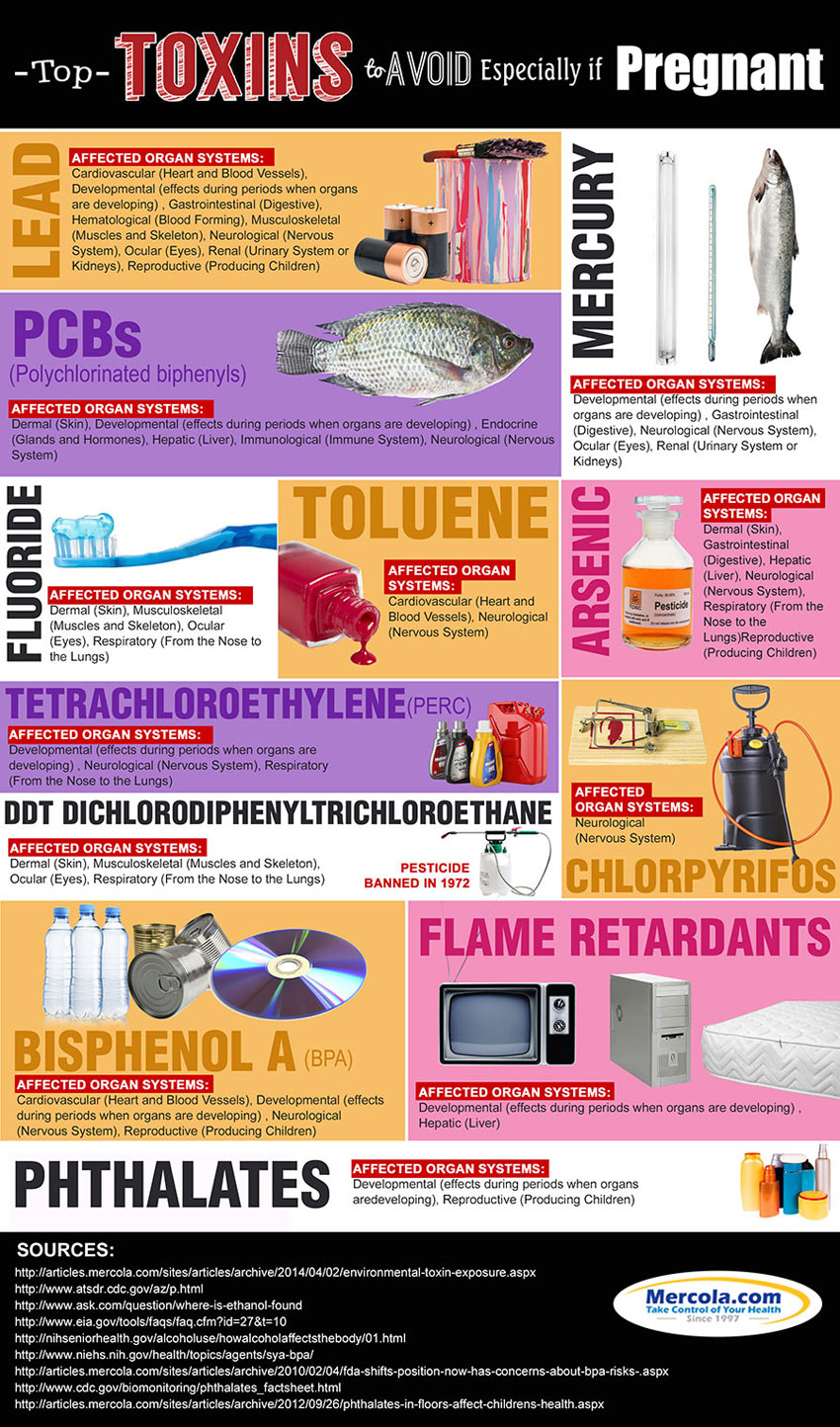
Top Toxins to Avoid

Toxins to Avoid If Pregnant

 Top Toxins to Avoid Especially If Pregnant
Environmental toxins are everywhere, and pregnant women and their unborn child are especially vulnerable to their pernicious effects. These chemicals do not only come from the environment, but may already be inside your home, car, purse – or worse, on your dinner plate!

The reality is, there are about 75,000 distinct chemicals that are produced here in America or imported from abroad. Many of these toxic agents have not been regulated properly. At this very moment, you may be holding in your hand a chemical cocktail, and your unborn child is especially at risk because of his or her underdeveloped system. 

Don't let the toxins damage your health or that of your baby or any woman you know who's expecting. Check out this infographic, “Top Toxins to Avoid Especially if Pregnant,” to discover the most common toxins that you’re exposed to, as well as where they come from. Share and spread this important information to every parent you know!

When pregnant, you should take extra care with the foods you eat and the chemicals you use in and outside of your home. There are many sources of toxic exposure that may put you, and your unborn baby, in harm's way. If you are expecting a child or know someone who is, share this infographic on the most common environmental toxins that pregnant women should avoid. 

Tuesday, December 9, 2014

Triclosan dangers

Triclosan

Triclosan, one of the most prevalent antibacterial compounds found in products, is the focus of a campaign undertaken by a coalition of health and environmental groups led by Beyond Pesticides and Food & Water Watch, aimed at removing triclosan from the market. Over the last few years, as a direct result of pressure from consumer groups and the media regarding the need for triclosan in consumer products and the mounting scientific evidence documenting adverse health effects, including impacts to the thyroid hormone, major manufacturers have quietly reformulated their products without triclosan.
Studies have increasingly linked triclosan (and its chemical cousin triclocarban), to a range of adverse health and environmental effects from skin irritation, endocrine disruption, bacterial and compounded antibiotic resistance, to the contamination of water and its negative impact on fragile aquatic ecosystems.

When introduced to the market in 1972, triclosan was confined to hospital and health care settings. Since then triclosan exploded onto the market place in hundreds of consumer products ranging from antibacterial soaps, deodorants, toothpastes, cosmetics, fabrics, toys, and other household and personal care products. Triclosan’s success on the consumer market has been aided by the false public perception that antibacterial products are best to protect and safeguard against potential harmful bacteria. However, an article in the journal Clinical Infectious Diseases, entitled "Consumer Antibacterial Soaps: Effective or Just Risky?" (2007), concludes that antibacterial soaps show no health benefits over plain soaps. In 2010, FDA stated that, “Existing data raise valid concerns about the [health] effects of repetitive daily human exposure to [triclosan]” and announced plans to address the use of triclosan in cosmetics or other products.

See a list of common products containing triclosan.

Recent Updates

  • Minnesota Bans Triclosan in Consumer Personal Care Cleaning Products
    Triclosan has been banned from consumer personal care cleaning products in the state of Minnesota by an act of the state legislature. This public health measure, SF 2192, states that “no person shall offer for retail sale in Minnesota any cleaning product that that contains triclosan and is used by consumers for sanitizing or hand and body cleansing.” The legislation takes effect on January 1, 2017. One of the legislation’s lead sponsors, state Senator John Marty, predicted that the odds are good that most manufacturers will phase out triclosan by then as a result of this effort and other marketplace pressure. For More information see Beyond Pesticides' press release.
  • FDA Will Require Manufacturers to Prove Safety and Efficacy of Antibacterial Products; Beyond Pesticdes' Press Release
    December 2013 - A new rule proposed by the U.S. Food and Drug Administration (FDA) will now require manufacturers of antibacterial hand soaps, body washes, and other consumer goods to prove that their products are both safe for long-term use and more effective than regular bar soap in order to remain on the market. This announcement, though long delayed, represents a positive step towards reining in the unnecessary use of antibacterial chemicals.FDA’s new rule, announced Monday, will be open for public comment for 180 days and manufacturers will have one year to submit new data on their products. FDA hopes to finalize its rule and determine whether antibacterial products can be “generally recognized as safe” (GRAS) by September 2016. Read FDA's Consumer Update.
    Let Yor voice be heard on these new proposed rules! The agency is accepting public comments until June 16, 2014. Submit your comment here.

  • Proctor & Gamble To Eliminate Triclosan From its Products by 2014
    September 2013- Multinational manufacturer Procter and Gamble (P&G) announced that it will eliminate the harmful antibacterial chemical triclosan from its products by 2014. P&G’s notice is the latest in a growing trend across the county, as both governments and private companies continue to move away from the use this dangerous and unnecessary substance. While P&G does not name the specific products from which it will be removing triclosan, it notes that the only remaining uses of triclosan are in the company’s antibacterial dish soap, professional hand soap, and some other personal care products (brands like Dawn and Safeguard Antibacterial Soaps).
  • Minnesota State Agencies to Stop Procurement of Triclosan
    The Minnesota Pollution Control Agency announced on March 3, 2013 that state agencies have been ordered by Governor Mark Dayton to stop buying products that contain triclosan, a synthetic, broad-spectrum antimicrobial agent that has become ubiquitous in consumer products ranging from face-washes to fabrics. This ban, which will go into effect in June, comes as the debate over the efficacy and necessity of triclosan intensifies in the Minnesota State legislature. A bill banning triclosan’s use outside of medical settings is expected to be introduced, and the legislature conducted a hearing Tuesday on the possible human health and environmental consequences of the chemical.
  • It is time once again to tell EPA to remove this dangerous chemical from the market.
    In March 2013, EPA opened the federal docket for triclosan, offically beginning the registration review of triclosan. Under pressure after its 2008 review, EPA announced that it would again review triclosan in 2013, five years earlier than scheduled. Over the last few years, as a direct result of pressure from consumer groups and the media regarding the need for triclosan in consumer products and the mounting scientific evidence documenting adverse health effects, including impacts to the thyroid hormone, major manufacturers have begun to quietly reformulate their products without triclosan.
  • Johnson & Johnson to Phase Out Triclosan. Health care and cosmetics giant Johnson and Johnson has announced that it will soon begin phasing out a number of potentially dangerous chemicals from its personal care brands, including triclosan. The company cites consumer concern over the safety of triclosan as among its reasons for the alteration in its products, hinting that it was uncomfortable with growing body of science linking triclosan to a number of health concerns. The phase out is scheduled to be complete by the end of 2015.
  • Canada Declares Triclsoan Toxic to the Environment. The Canadian government declared triclosan toxic to the environment, a move which would see the use of the chemical curtailed sharply in Canada. The draft risk assessment found triclosan to be toxic to the environment but did not find enough evidence to say it is hazardous to human health. A toxic designation under the Canadian Environmental Protection Act triggers a process to find ways to curtail a chemical’s use, including a possible ban in a range of personal-care products.
  • Video: Triclosan 101. Allison Aiello, PhD discusses the antibacterial ingredient triclosan, its efficacy, and potential health impacts as part of the Pesticides and Health Panel at "Healthy Communities: Green solutions for safe environments," Beyond Pesticides' 30th National Pesticide Forum, March 30-31, 2012, Yale University, New Haven, CT.

Resources

  • Sign the Pledge. Join the campaign to end the consumer use of triclosan.
  • Triclosan Model Resolution. Get your municipality, institution or company to adopt this resolution to not buy products with triclosan and supporting broader elimination of non-medical uses.
  • Regulatory and Policy. The latest information and history on legal procedures to ban consumer uses of triclosan.
  • Find triclosan-free products from a list of companies who have already signed the pledge to be triclosan-free.

Update Archives

  • Beyond Pesticides, Center for Environmental Health and Campaign for Safe Cosmetics urges Bath and Body Works to stop selling Triclosan products. With flavors like “tangelo orange twist,” and “sugar lemon fizz,” popular body care chain, Bath and Body Works, has marketed an entire line of antibacterial body care products to teens and young adults. Unfortunately, these products contain the toxic hormone disruptor and water contaminant, triclosan, which could be hazardous to teenagers whose bodies are still developing. Join us in asking Bath and Body Works to stop selling triclosan products that claim to “Spread Love, Not Germs.”
  • Overwhelming support for the petition to ban Triclosan. Over 10,000 individuals told EPA, via email and docketed comments, to ban the dangerous antibacterial triclosan. Additionally, scores of public health and advocacy groups, local state departments of health and the environment, as well as municipal and national wastewater treatment agencies submitted comments requesting an end to triclosan in consumer products. EPA published the petition for public comment in December 2010 and closed the comment period on April 8, 2011. Beyond Pesticides once again urged the agency to ban the uses of triclosan in consumer products citing risks to human and environmental health.
  • Act by April 8, 2011. Let EPA know that it's time to ban triclosan. EPA has extended the comment period for another 60 days to April 8, 2011.Your voice is critical in generating public comments on a petition, published in the Federal Register, to ban the antibacterial chemical triclosan. As you may know, this chemial, now found in the bodies of 75% of the US population, is linked to endocrine disruption, bacterial and antibiotic resistance, dioxin contamination, and contaminated fish and biosolids.
  • EPA publishes petition to ban Triclosan for public comment
  • EPA announced a 60-day public comment period for the petition filed by Beyond Pesticides and Food and Water Watch to ban the controversial antimicrobial pesticide triclosan for non-medical use. The petition, filed on January 14, 2010, identifies pervasive and widespread use of triclosan and the agency's failure to address triclosan's impacts on human and environmental health, conduct assessments for residues in drinking water and food and concerns related to antibacterial resistance and endocrine disruption. The petition cites various violations of numerous environmental statues including the Clean Water Act, Safe Drinking Water Act and the Endangered Species Act.
  • Comments are accepted until April 8, 2011 at www.regulations.gov. Direct comments to docket number: EPA–HQ–OPP–2010–0548. When commenting, please specify the statute to which your comments refer (FIFRA, FFDCA, SDWA, CWA, or ESA) and the specific issue(s) raised in the petition regarding that statute on which you are commenting. (December, 2010)
  • Congresswoman Urges FDA to Ban Triclosan. House Rules Committee Chairwoman Louise M. Slaughter and two colleagues asked the U.S. Food and Drug Administration (FDA) to ban triclosan due to the hazards that this chemical poses, including antibiotic resistance and potentially leading to higher health care costs, citing both Beyond Pesticides and Food and Water Watch's petition currently pending before the agency (November 2010).
  • Newly released data from the Centers for Disease Control and Prevention (CDC) finds that levels of triclosan in humans have increased by 50% since 2004 (August 2010).
  • Beyond Pesticides tells FDA that Triclosan is too hazardous to the aquatic environment. In response to the agency's request for environmental data regarding tricosan's use in certain over the counter products, Beyond Pesticides and others reminded the agency that it must recognize that significant adverse environmental impacts will occur with continued triclosan use (May 2010).
  • FDA says, "existing data raise valid concerns" regarding exposure to triclosan. FDA is considering action in light of a petition submitted by Beyond Pesticides, and others, and in response to a letter from Rep. Markey (April 2010).
  • Beyond Pesticides, Food & Water Watch and more than 80 organizations petitioned EPA to ban triclosan for non-medical applications on the basis that uses violate federal laws regulating pesticides, clean and safe drinking water, and endangered species (January 2010).
  • Looking for a product free of triclosan? Find one from a list of companies that have signed the pledge to be triclosan-free.
  • Take Action! Learn how you can help end the unnecessary use of this toxic antibacterial chemical. Stay in the loop on triclosan and other issues by joining us on Facebook.

Monday, December 8, 2014

Colgate Toothpaste Chemical Linked to Cancer

By
Since cancer seems to be an ever-present enemy, we greet the appearance of its lethal emissaries in prosaic objects with a morbid lack of surprise: carcinogens lurk in coffee, hamburgers, rugs, dry-cleaned clothes, even peanut butter. And it may apparently reside in one of the most popular toothpastes on the market, a toothpaste you’ve probably thrown into your own shopping cart with nary a second thought. 

The possible culprit is the germicide triclosan, found in Colgate Total, the widely-used brand manufactured by Colgate-Palmolive. Introduced in 1997, the manufacturer claims that it is the “only toothpaste approved by the FDA to help fight plaque and gingivitis” by blasting the teeth and gums with triclosan.

The claim is at least partly true: no other toothpaste in the United States contains triclosan, though plenty of antibacterial soaps and cosmetics count it as an ingredient. It is that bacteria-fighting capability that has recently raised questions about Colgate Total’s safety, as well as about whether the Food and Drug Administration knuckled under and did not heed warnings about the compound.


Triclosan is a chlorinated aromatic compound: very basically, two benzene rings (a sturdy hydrocarbon, with six atoms of carbon and hydrogen each) linked by an oxygen atom, with three chlorine atoms protruding like spokes, as well as a lone hydroxyl group (oxygen + hydrogen). First used in the 1970s in hospitals, it has since become a widespread antimicrobial agent. Not only is triclosan present in Colgate Total and many household soaps, but it can also be found in coolers, odor-protected shoes and makeup, according to Mae Wu, a lawyer with the Natural Resources Defense Council. She says that triclosan is “all over the place,” even if, as she notes, we had “been doing fine without it” for several centuries of human-microbial cohabitation of the planet. 

“Triclosan is 110 percent marketing,” says Michael Osterholm, who heads the Center for Infectious Disease Research and Policy at the University of Minnesota. Osterholm, who helped Minnesota become the first state to ban most uses of triclosan. He told me the compound has been superseded by superior, safer antimicrobial agents, and Procter and Gamble has begun advertising its Crest toothpaste as being “100% triclosan free.” That may also be a triumph of marketing, but one that could lead more people to question the presence of triclosan in household items, thereby forcing Colgate’s hand.
“They understand that the public is getting this,” Osterholm says of the Crest claim.


“Triclosan isn't an essential ingredient in many products,” writes Dr. James M. Steckelberg of the Mayo Clinic. “While triclosan added to toothpaste has been shown to help prevent gingivitis, there's no evidence that antibacterial soaps and body washes containing triclosan provide any extra benefits, according to the Food and Drug Administration.” On its website, the FDA says that soaps that contain antibacterial compounds like triclosan have not been shown to be “any more effective at preventing illness than washing with plain soap and water.” The FDA stops well short, however, of calling triclosan a danger, merely suggesting that consumers think twice about buying products that contain it.

Earlier this summer, the Society for Healthcare Epidemiology in America, whose mission is to prevent hospital infections, made a blunt recommendation to doctors in its guidelines for hospital hygiene: “Do not use triclosan-containing soaps.” Those guidelines also cite “concerns about the potential human and environmental impacts of this chemical” and suggest, instead, the use of alcohol-based hand rubs.

The FDA first promised to look at triclosan in handsoap in 1974. Four decades later, that study remains incomplete, though it will reportedly be released in 2016.

Meanwhile, most people are absorbing triclosan whether they know it or not. Triclosan is nearly ubiquitous, easily entering the body by ingestion or through the skin. The Centers for Disease Control and Prevention tested 2,517 people in 2003 and found that almost three-fourths had triclosan in their urine. Toothpaste is an especially potent triclosan-delivery vehicle. “People who brushed their teeth with Colgate Total had more than five times as much triclosan in their urine as people who didn’t use it,” Wu wrote in an NRDC blog post.

Far less clear is what triclosan does (or doesn’t do) to the human organism. For example, a review by scientists at the University of California at Davis concluded that when it comes to triclosan and triclocarban, a chemically related antibacterial agent, “the benefits may not be worth the risks.” The researchers wrote that triclosan and triclocarban could cause neural and cardiac ailments, though they also conceded that “the research is in its early stages."  


Other recent research suggests that triclosan could cause breast cancer, though the results were gleaned from exposure in mice. Triclosan’s effects on the endocrine system, which delivers hormones throughout the body, are also increasingly thought to be harmful; a 2006 study of bullfrogs and tadpoles exposed to triclosan in aquatic environments found that “exposure to low levels of triclosan disrupts thyroid hormone-associated gene expression and can alter the rate of thyroid hormone-mediated postembryonic...development.” If triclosan does turn out to be an endocrine disruptor, that would make young children, infants and pregnant women especially vulnerable. (There are also concerns about the accumulation of triclosan in waterways, where its build-up could “disrupt aquatic life by changing native bacterial communities,” according to aquatic ecologist Emma Rosi-Marshall.)
And though the FDA is now urging Americans to think about their triclosan consumption, the agency didn’t seem nearly as concerned with the issue 17 years ago, when it declared Colgate Total ready for supermarket shelves. In 2010, the Natural Resources Defense Council sued the FDA for access to documentation regarding Colgate Total’s approval; the documents, totalling 35 pages, had never been seen by the public before.

Bloomberg News had three scientists examine the FDA’s approval of Colgate Total. “The recently released pages, taken alongside new research on triclosan, raise questions about whether the agency did appropriate due diligence in approving Total 17 years ago, and whether its approval should stand in light of new research,” Bloomberg concluded in its extensive investigation.  

“The literature is all over the place,” admits Rear Admiral Sandra L. Kweder, who is the deputy director of the FDA’s office of new drugs. She says that the burden is on soap manufacturers to show that their product is safe and efficient. 

Industry lobbyists do have complexity on their side: given the number of chemicals to which the average person is exposed, and the genetic disposition some people have to cancer, it is exceedingly difficult to make a direct epidemiological correlation between household products and incidences of cancer. Even with well-known villains like bisphenol-A (BPA) and phthalates, the science remains in dispute.

Some aren’t waiting for a resolution that could come in the distant future. Earlier this year, Minnesota became the first state to prohibit usage of triclosan, though FDA-approved products like Colgate Total are outside the purview of the ban, which doesn’t take effect until 2017.   

Colgate-Palmolive says its product is safe. Patricia Verduin, Colgate-Palmolive’s head of research and development, sent me an extensive rebuttal of several studies that seem to show triclosan’s potential dangers. She noted that 90 studies, involving a total of 20,000 people, have made Colgate Total “the most extensively tested and reviewed  toothpaste in the world.” She added that studies linking the compound to cancer and thyroid problems “use excessively high levels of triclosan — in some instances, thousands of times greater than the level of exposure from use of consumer products.” Verduin also pointed out that “regulatory authorities around the world… affirm that triclosan as used in consumer products is not a human carcinogen or endocrine disruptor.”


And in an op-ed she wrote for Fox News, Verduin maintains that “[r]ecent claims that triclosan in Colgate Total can lead to cancer are absolutely untrue.” She discounts findings about triclosan’s potential endocrine disruption as “rumors.”

Yet if the battle over BPA (which also has its defenders) is any indication, triclosan will probably meet with a rising tide of public suspicion, and more and more products will appear with green stickers proclaiming themselves triclosan-free, as Crest already does. Many major corporations have removed triclosan from soaps and cosmetics. Others will likely follow, if for no other reason than for an image of healthful living.

Triclosan may be falling out of favor, but, for some, the underlying concern is that of federal regulators too easily convinced by science done not in the public interest, but for the sake of corporate gains. Writing last year in a New York Times op-ed, investigative reporter Ian Urbina noted that federal regulators effectively allow industry to police itself, so that few of the 85,000 industrial chemicals in use today — including the ones on your bathrooms shelves — have passed unbiased governmental inspection. “Unlike pharmaceuticals or pesticides,” Urbina writes, “industrial chemicals do not have to be tested before they are put on the market. Under the law regulating chemicals, producers are only rarely required to provide the federal government with the information necessary to assess safety.”

But for others, the chemicals aren’t dangerous if used with moderation. Dr. Bruce D. Hammock, for example, runs the Laboratory of Pesticide and Biotechnology at UC Davis and was one of the investigators involved in the study on triclosan and triclocarban. “There are real risks to triclosan,” Hammock says. “And there are real benefits.” He welcomes more research into its effects on the human body.

Hammock calls triclosan “quite a good antimicrobial” that belongs in the hospital, not on the kitchen counter. “There’s no reason for it to be there,” he says of its inclusion in hand and dish soaps. 

Toothpaste is another matter, and Hammock points out that the concentration of triclosan is low in Colgate Total, while, at the same time, the incidence of gingivitis is high enough to warrant the compound’s inclusion. Hammock adds that he is happy with his toothpaste of choice: Colgate Total.

Regulators share his confidence. Jeff Ventura, a press officer for the FDA, sent me a statement asserting that “based on the scientific evidence, in this case, the balance of benefit and risk has been shown to be favorable for [Colgate Total].” The statement does also say, however, that “use of an ingredient may be acceptable for one product but not for another,” thus perhaps opening the way for a ban of triclosan in soaps. After all, federal regulators can’t ignore growing concerns buttressed by mounting evidence.

Asked if the FDA would revisit its approval of Colgate Total, Dr. Kweder hesitates.
“1997 was a long time ago,” she says.

Sunday, December 7, 2014

Horrifying Hidden Food Ingredient

http://www.tracybenson.com/sites/default/files/Reading-Nutrition-Labels.jpg
As artificial and engineered ingredients have replaced the natural ones our grandmothers used to cook with, we’re increasingly finding ourselves exposed to potentially harmful chemicals. The problem is many of these chemicals aren’t listed on food packaging either because they’re part of the packaging or because they’re involved in the manufacturing process. Learn more about some of the harmful chemicals you might be consuming.

Phthalates

This derivative of plastic is found in a wide variety of foods, but especially dairy products. While the reason is unclear, it’s thought the plastic tubing used to milk cows contains the chemical that then ends up in the dairy. Phthalates are related to BPA and masquerade as estrogen in your body, leading to hormonal disruption and a host of other effects.

BPA

BPA was very publicly removed from plastic bottles, but is still widely present in the environment and in certain foods. Cans are often lined with BPA, which can then contaminate the food inside. Microwaving plastic food containers can also cause BPA to leech into the foods inside. Like phthalates, this chemical is similar enough to estrogen to act like a hormone in the body, which can disrupt normal hormonal action.

Brominated Vegetable Oil

This chemical is commonly used in drinks and helps keep ingredients from separating on shelves. The problem is it’s been banned as a food additive in several countries and has been linked to neurologic symptoms like headaches, fatigue and a loss of muscle coordination and memory.

Butylated Hydroxyanisole (BHA)

While the FDA has deemed this chemical to be safe for human consumption, the National Institutes of Health (NIH) has said it’s reasonably likely to be a carcinogen. The chemical is a preservative used in a wide variety of fast foods to prevent oils and butters from going rancid. In animal studies, the additive has been found to cause cancer in high doses and its effects on humans at lower doses are unclear.
 

Food Colorings

Look on the side of any soft drink or candy bag and you’re likely to see a colorant. Blue 2 (brain tumors), Green 3 (bladder and testicular cancer), Red 3 (thyroid cancer), Red 40 (immune system tumors), Yellow 6 (adrenal tumors and allergic reaction) have all been linked to a variety of cancers in animal studies. While companies claim that low doses of these colorants are harmless, the chemicals are often put in food without significant, long-term testing in humans.


3-MCPD

This chemical is used in the manufacture of tea bags and sausage casings and is part of the factory process of breaking down proteins often seen as “hydrolyzed soy protein.” It’s also been found in oyster sauce, hoisin sauce and soy sauce. The chemical is a known carcinogen and may disrupt fertility in males. It’s rarely if ever listed as an ingredient.


Friday, October 31, 2014

Negative effects of Sugar

http://cdn.moneycrashers.com/wp-content/uploads/2011/10/happy-halloween-candy.jpg 
 Happy Halloween everyone!! I hope you have a safe and enjoyable Halloween day! I thought an appropriate post today would be about sugar. Enjoy your treats, but don't overdo it...indulge sparingly on the sugar.


·         Sugar can suppress your immune system.

·         Sugar upsets the mineral relationships in the body.

·         Sugar can cause juvenile delinquency in children.

·         Sugar eaten during pregnancy and lactation can influence muscle force production in offspring, which can affect an individual’s ability to exercise.

·         Sugar in soda, when consumed by children, results in the children drinking less milk.

·         Sugar can elevate glucose and insulin responses and return them to fasting levels slower in oral contraceptive users.

·         Sugar can increase reactive oxygen species (ROS), which can damage cells and tissues.

·         Sugar can cause hyperactivity, anxiety, inability to concentrate and crankiness in children.

·         Sugar can produce a significant rise in triglycerides.

·         Sugar reduces the body’s ability to defend against bacterial infection.

·         Sugar causes a decline in tissue elasticity and function – the more sugar you eat, the more elasticity and function you lose.

·         Sugar reduces high-density lipoproteins (HDL).

·         Sugar can lead to chromium deficiency.

·         Sugar can lead to ovarian cancer.

·         Sugar can increase fasting levels of glucose.

·         Sugar causes copper deficiency.

·         Sugar interferes with the body’s absorption of calcium and magnesium.

·         Sugar may make eyes more vulnerable to age-related macular degeneration.

·         Sugar raises the level of neurotransmitters: dopamine, serotonin, and norepinephrine.

·         Sugar can cause hypoglycemia.

·         Sugar can lead to an acidic digestive tract.

·         Sugar can cause a rapid rise of adrenaline levels in children.

·         Sugar is frequently malabsorbed in patients with functional bowel disease.

·         Sugar can cause premature aging.

·         Sugar can lead to alcoholism.

·         Sugar can cause tooth decay.

·         Sugar can lead to obesity.

·         Sugar increases the risk of Crohn’s disease and ulcerative colitis.

·         Sugar can cause gastric or duodenal ulcers.

·         Sugar can cause arthritis.

·         Sugar can cause learning disorders in school children.

·         Sugar assists the uncontrolled growth of Candida Albicans (yeast infections).

·         Sugar can cause gallstones.

·         Sugar can cause heart disease.

·         Sugar can cause appendicitis.

·         Sugar can cause hemorrhoids.

·         Sugar can cause varicose veins.

·         Sugar can lead to periodontal disease.

·         Sugar can contribute to osteoporosis.

·         Sugar contributes to saliva acidity.

·         Sugar can cause a decrease in insulin sensitivity.

·         Sugar can lower the amount of Vitamin E in the blood.

·         Sugar can decrease the amount of growth hormones in the body.

·         Sugar can increase cholesterol.

·         Sugar increases advanced glycation end products (AGEs), which form when sugar binds non-enzymatically to protein.

·         Sugar can interfere with the absorption of protein.

·         Sugar causes food allergies.

·         Sugar can contribute to diabetes.

·         Sugar can cause toxemia during pregnancy.

·         Sugar can lead to eczema in children.

·         Sugar can cause cardiovascular disease.

·         Sugar can impair the structure of DNA.

·         Sugar can change the structure of protein.

·         Sugar can make the skin wrinkle by changing the structure of collagen.

·         Sugar can cause cataracts.

·         Sugar can cause emphysema.

·         Sugar can cause atherosclerosis.

·         Sugar can promote an elevation of low-density lipoproteins (LDL).

·         Sugar can impair the physiological homeostasis of many systems in the body.

·         Sugar lowers enzymes ability to function.

·         Sugar intake is associated with the development of Parkinson’s disease.

·         Sugar can increase the size of the liver by making the liver cells divide.

·         Sugar can increase the amount of liver fat.

·         Sugar can increase kidney size and produce pathological changes in the kidney.

·         Sugar can damage the pancreas.

·         Sugar can increase the body’s fluid retention.

·         Sugar is the number one enemy of the bowel movement.

·         Sugar can cause myopia (nearsightedness).

·         Sugar can compromise the lining of the capillaries.

·         Sugar can make tendons more brittle.

·         Sugar can cause headaches, including migraines.

·         Sugar plays a role in pancreatic cancer in women.

·         Sugar can adversely affect children’s grades in school.

·         Sugar can cause depression.

·         Sugar increases the risk of gastric cancer.

·         Sugar can cause dyspepsia (indigestion).

·         Sugar can increase the risk of developing gout.

·         Sugar can increase the levels of glucose in the blood much higher than complex carbohydrates in a glucose tolerance test can.

·         Sugar reduces learning capacity.

·         Sugar can cause two blood proteins – albumin and lipoproteins – to function less effectively, which may reduce the body’s ability to handle fat and cholesterol.

·         Sugar can contribute to Alzheimer’s disease.

·         Sugar can cause platelet adhesiveness, which causes blood clots.

·         Sugar can cause hormonal imbalance – some hormones become underactive and others become overactive.

·         Sugar can lead to the formation of kidney stones.

·         Sugar can cause free radicals and oxidative stress.

·         Sugar can lead to biliary tract cancer.

·         Sugar increases the risk of pregnant adolescents delivering a small-for-gestational-age (SGA) infant.

·         Sugar can lead to a substantial decrease the in the length of pregnancy among adolescents.

·         Sugar slows food’s travel time through the gastrointestinal tract.

·         Sugar increases the concentration of bile acids in stool and bacterial enzymes in the colon, which can modify bile to produce cancer-causing compounds and colon cancer.

·         Sugar increases estradiol (the most potent form of naturally occurring estrogen) in men.

·         Sugar combines with and destroys phosphatase, a digestive enzyme, which makes digestion more difficult.

·         Sugar can be a risk factor for gallbladder cancer.

·         Sugar is an addictive substance.

·         Sugar can be intoxicating, similar to alcohol.

·         Sugar can aggravate premenstrual syndrome (PMS).

·         Sugar can decrease emotional stability.

·         Sugar promotes excessive food intake in obese people.

·         Sugar can worsen the symptoms of children with attention deficit disorder (ADD).

·         Sugar can slow the ability of the adrenal glands to function.

·         Sugar can cut off oxygen to the brain when given to people intravenously.

·         Sugar is a risk factor for lung cancer.

·         Sugar increases the risk of polio.

·         Sugar can cause epileptic seizures.

·         Sugar can increase systolic blood pressure (pressure when the heart is contracting).

·         Sugar can induce cell death.

·         Sugar can increase the amount of food that you eat.

·         Sugar can cause antisocial behavior in juvenile delinquents.

·         Sugar can lead to prostate cancer.

·         Sugar dehydrates newborns.

·         Sugar can cause women to give birth to babies with low birth weight.

·         Sugar is associated with a worse outcome of schizophrenia.

·         Sugar can raise homocysteine levels in the bloodstream.

·         Sugar increases the risk of breast cancer.

·         Sugar is a risk factor in small intestine cancer.

·         Sugar can cause laryngeal cancer.

·         Sugar induces salt and water retention.

·         Sugar can contribute to mild memory loss.

·         Sugar water, when given to children shortly after birth, results in those children preferring sugar water to regular water throughout childhood.

·         Sugar causes constipation.

·         Sugar can cause brain decay in pre-diabetic and diabetic women.

·         Sugar can increase the risk of stomach cancer.

·         Sugar can cause metabolic syndrome.

·         Sugar increases neural tube defects in embryos when it is consumed by pregnant women.

·         Sugar can cause asthma.

·         Sugar increases the chances of getting irritable bowl syndrome.

·         Sugar can affect central reward systems.

·         Sugar can cause cancer of the rectum.

·         Sugar can cause endometrial cancer.

·         Sugar can cause renal (kidney) cell cancer.

·         Sugar can cause liver tumors.

·         Sugar can increase inflammatory markers in the bloodstreams of overweight people.

·         Sugar plays a role in the cause and the continuation of acne.

·         Sugar can ruin the sex life of both men and women by turning off the gene that controls the sex hormones.

·         Sugar can cause fatigue, moodiness, nervousness, and depression.

·         Sugar can make many essential nutrients less available to cells.

·         Sugar can increase uric acid in blood.

·         Sugar can lead to higher C-peptide concentrations.

·         Sugar causes inflammation.

·         Sugar can cause diverticulitis, a small bulging sac pushing outward from the colon wall that is inflamed.

·         Sugar can decrease testosterone production.

·         Sugar impairs spatial memory.

·         Sugar can cause cataracts.