Wednesday, August 27, 2014

Garden update & harvest

 8/25/14 - Today's harvest - 8 large tomatoes, Cossack Pineapple ground cherry tomatoes, last 2 cucumbers, yellow pear tomatoes, chocolate cherry tomatoes and angel white tomatoes
 8/26/14 - Chocolate habanero pepper
  8/26/14 - White habanero pepper
  8/26/14 - Time to take out the cucumber and zucchini plants! There was one last zucchini growing, so I just cut off all the leaves from that plant and left some of the somewhat alive leaves to let it grow some more
  8/26/14 - My little helpers picking cherry tomatoes
 8/26/14 - My little helpers picking ground cherry tomatoes

Tuesday, August 26, 2014

GMO Food

It's Worse Than We Thought - Dr. Russell Blaylock
by Permaculture88 
Over the last decade, as genetically modified, or GMO, foods have increasingly taken over our food supply, we've been learning more about their dangers to our health.

Now, one courageous doctor is pointing to mounting evidence that leaves no doubt — GMO foods are even worse than we were told.

As this respected doctor points out in a riveting new presentation, no long-term human studies have ever supported GMO safety. Shockingly, the World Health Organization only requires a mere 90 days of testing to claim that GMOs are safe. Well, no one dies from smoking cigarettes within 90 days of starting to smoke, either!

Yet while lifetime studies still have not been done on humans, scientists have done these studies on animals — and what they found is stunning. Lab mice fed just a 33 percent GMO diet begin developing aggressive cancers (particularly breast cancer), liver failure, and kidney failure.

Shockingly, 50 percent of the males and 70 percent of the female animals on the GMO diet succumbed to early death at an age equivalent to 40 to 50 human years.

While more people have begun to fight back against GMOs, the big GMO companies spend millions of dollars to defeat laws that would require GMO labeling. Quite simply, these big companies know that GMO crops are cheaper to grow, and therefore more profitable.

In the meantime, many health experts now warn us to take the only positive action available to protect our health — avoiding GMOs as much as humanly possible. But considering the fact that GMOs are hidden in over 30,000 food products, that is not an easy task.

Fortunately, one courageous doctor has stepped up to the plate. Dr. Russell Blaylock, one of America's leading medical researchers and nutritionists, has created a special free video presentation that explains the hidden health hazards of GMOs. Dr. Blaylock will show you how to protect your family from GMOs and their dangers — aisle by aisle at the grocery store.

Dr. Blaylock's new video presentation exposes how GMO ingredients and other harmful additives are hidden on labels under safe-sounding names. In fact, you'll see some of the actual labels and find out what to watch for.

And those stickers pasted onto fruits and vegetables? Using real examples, you'll learn a simple way to tell the difference between GMO produce that may also be packed with harmful pesticides and herbicides, and produce that is safe and natural.

Cracking the GMO Code

Travis Davis, health publisher at Newsmax, previewed Dr. Blaylock's presentation for our readers and reports: "GMOs enter your body through thousands of packaged and canned food products, through fresh produce, and through the meat, chicken, and fish you eat. The expert help Dr. Blaylock offers in this video reveals everything you need to know to avoid GMOs at the grocery store as well as restaurants."

Since the introduction of GMO foods, many cancers and other diseases have skyrocketed in humans. Can this really be a coincidence? Please use the information available in this online educational presentation, Cracking the GMO Code to help protect your own health — and the health of your family.

Renowned former neurosurgeon Russell Blaylock, M.D., left conventional medicine after decades of practice to concentrate on nutrition and disease prevention. He is the author of several health books and medical editor of The Blaylock Wellness Report.

Editor's Note: This video blows the lid off the GMO controversy and exposes little-known dangers. Plus, you'll see exactly how to avoid GMOs in their many hidden forms, in grocery stores and in restaurants.


Saturday, August 23, 2014

Yoga - Toned Abs

Yoga: Try this Ancient Exercise to Help Tone Your Abs


http://blogs.plos.org/neuroanthropology/files/2014/04/yoga_three_panel.jpg
By Dr. Mercola
Yoga is a practice that has been around for 5,000 years. Although many regard Yoga as just another form of exercise, it's really a much more comprehensive practice that integrates mental, physical and spiritual elements.
In fact, it is said the physical positions of yoga represent only about 10 percent of its value, and the other 90 percent lies in the mental and spiritual growth that happens on the mat.
Yoga can be regarded as a form of meditation that demands your full attention and participation. The Yoga positions (asanas) are tools for helping you learn new ways of moving and new ways of responding to your body and mind, which can be extended into other areas of your life.
The health benefits of Yoga are many. It strengthens and tones your body, increases circulation and oxygenation, energizes you in the morning and helps you unwind in the evening.
People report the disappearance of aches and pains, better immunity, improved sleep, lowered blood pressure, improved digestion, and faster healing when they do Yoga.
Most people also feel more grounded, and many report increased compassion for others as a direct result of the compassion learned on the mat.
That said, from a purely physical standpoint, Yoga is excellent for your core and compliments other parts of your overall exercise program, such as interval and strength training. It strengthens your back, pelvis, shoulders, and spine—and of course helps cut and reveal those six-pack abs!

Yoga Positions to Flatten Your Abs

Are you tired of the same old crunches and curls? Try some Yoga poses for a change. You can train your abs while training your mind. Simple, controlled Yoga exercises such as leg lifts, boat pose, plank pose, and "cobra" build abdominal strength while at the same time strengthening the opposing muscle groups in your back. You will also experience benefits with your balance and breathing.
Slideshows in Women's Health1 and Huffington Post2 offer some additional Yoga postures for abdominal muscles.
One of the more important principles of Yoga is ahimsa, which is Sanskrit for "nonviolence."3 This refers not only to physical violence, but also to the violence of words or thoughts. Set aside the "no pain no gain" principle—Yoga should never be painful.
Ahimsa means treating your body (and your mind) with compassion and respect, as opposed to forcing it to do what you want it to do. If you can't do a full Yoga pose, then just take a comfortable position that "moves in the direction" of the pose. Have patience. Forcing your body into submission will only increase your chances of injury and make it a very unpleasant experience.

Bathroom Break Yoga

If you're too busy to sneak off to a Yoga class, then take your Yoga on the road. Yoga postures can be adapted to restrooms in planes, trains and buses (but don't forget to wash your hands!). Poses such as half dog, chair, tree, triangle and warrior can be adapted for "bathroom break Yoga."
If you incorporate some Yoga while traveling, not only will you reduce your sitting time but your flight may seem much shorter. Bathroom Yoga also provides a polite way to take a break from the crying child beside you... "Please excuse me, but I must go do my Yoga now." Of course, practice these poses at home first so you don't end up head first in the airplane latrine.
You can take some of these positions in your office as well, during your break or lunch hour. Take a break from the computer chair, even if it's for just a few minutes. Studies show that sitting for extended periods of time can shorten your lifespan, even if you exercise.

Foundation Training Can Help Reverse the Effects of Excess Sitting

Scientific research suggests that decreasing sitting time to less than three hours per day could add two years to your lifespan. An analysis of 18 studies found people who sat for the longest periods of time had twice the risk for diabetes and heart disease as those who sat the least.
Excessive sitting, often related to using computers and other electronic devices, can damage your posture and contribute to back pain, neck pain, carpal tunnel, and many other physical problems. Most structural problems, such as back pain, related to excess sitting and sitting improperly can be prevented by standing up frequently and correcting your body position.
Besides Yoga, Foundation Training (developed by chiropractor Eric Goodman, featured in the Ted Talk above) is an excellent way to counter the effects of sitting. Foundation Training is based on integrating the muscular chains of your body with simple, powerful exercises that help strengthen and realign your spine and core. No equipment is needed, so you can do them just about anywhere.
As a starting point, Dr. Goodman suggests making the following adjustments to your body while sitting. These recommendations are not meant to replace the way you sit constantly, but to give you useful alternative positions to use. It is recommended that you try them often, as your body is likely in need:
  1. Backrests tend to promote excessive rounding of the spine and push us into what's called an anterior head carriage. Sit upright on the front edge of a chair and practice the next two tips. At least two-thirds of your thigh should be off of the chair, and your knees should be no more than six inches apart.
  2. When sitting, try to keep your chin behind your chest bone. When your chin is too far forward, you will inadvertently teach your hip flexors to remain abnormally short and set yourself up for increased compression and degeneration.
  3. An easy way to learn to lengthen your hip flexors without hyperextending your spine is to slowly increase the distance between your rib cage and pelvis while keeping your chin pulled in and down towards your throat. This is demonstrated in the last five minutes of the TED Talk linked above.
I have been doing the founder about eight times a day recently and have noticed remarkable improvement in some nagging low back I have had. If this is a challenge for you I would strongly recommend that you consider adding the "Founder" exercise to your daily routine. Dr. Goodman demonstrates the Founder on the video below.
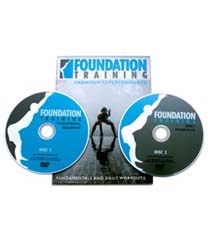
Foundation DVD
Order button

Do Yoga Outdoors for Additional Benefits

One of the reasons traveling is so exhausting is that you have little contact with the earth. Have you noticed how much better you feel when you walk barefoot on the ground, whether it's dirt or sand or grass? Science has finally solved this mystery!
For most of our evolutionary history, humans have had continuous contact with the earth, but this is certainly not the case today. We are separated from it by a barrier of asphalt, wood, rugs, plastics, and especially shoes. Living in direct contact with the earth grounds your body, producing beneficial electrophysiological changes that help protect you from potentially disruptive electromagnetic fields. Some of the EMFs closest to our bodies are those generated by the electronic devices that have practically become a modern appendage – like smart phones and iPads.
Your immune system functions optimally when your body has an adequate supply of electrons, which are easily and naturally obtained by barefoot/bare skin contact with the Earth. Research indicates Earth's electrons are the ultimate antioxidants, acting as powerful anti-inflammatories.
Chronic inflammation leads to a multitude of health problems. Therefore, reducing inflammation will help mitigate the negative effects of excessive sitting. Earthing (grounding) decreases the effect of the potentially disruptive electromagnetic fields that are emitted by those electronic devices we've come to depend on.
So, to significantly bump up your Yoga benefits, take your poses outside so that you are grounding yourself at the same time! Make sure your feet or hands are in direct contact with the Earth, rather than separated from it by a rubber mat. Grass or even sand make suitable Yoga substrates on which to take your poses.

High Intensity Training

New Research Reveals Why High Intensity Training Is So Beneficial for Health - It May Even Help Prevent Cancer
By Dr. Mercola
Many studies support the importance of high-intensity interval training (HIIT) to improve your health. Some of the latest research involves myokines—a class of cell-signaling proteins produced by muscle fibers—and how they can combat cancer and metabolic syndrome. 

Dr. Doug McGuff, an emergency room physician, is also an expert in high intensity training as applied to strength training. My previous interview with him was very popular, and we recently sat down again to discuss some of this more recent research.

What Is High Intensity Strength Training?

What distinguishes high intensity strength training from regular weight-lifting is that it’s a process where you’re trying to generate a stimulus to cause strength and metabolic improvements, as opposed to simply trying to demonstrate strength by lifting the weight by any means possible.

“You’re actually using a style of performance that makes the exercise very, very hard,” he explains. “It produces a very rapid rate and depth of fatigue, which is the end-goal of what you’re doing with that kind of exercise.

You’re lifting and lowering the weight very slowly in a way that deprives you of all momentum and in a way that fatigues the muscle deeply and quickly... It is definitely something that triggers all of the desirable outcomes from exercis
e.”

High Intensity Strength Training Promotes Anti-Inflammatory Myokines


Exercise plays an important role in your health, in part by its ability to affect your body composition. Some forms of exercise are more effective than others in this regard, however.

Unfortunately, anywhere from 90 to 98 percent of people who exercise are NOT doing high intensity exercises. By focusing on slow endurance-type exercises, such as running on a treadmill, you actually forgo many of the most profound benefits of exercise.

Conventional thinking has been that the human body is a homeostatic organism that automatically trends toward optimal health. According to Dr. McGuff, this is not really the case... and this is where recent research into myokines comes in.

Once they’re factored into the equation, it becomes easier to see how and why each lifestyle choice adds to or takes away from your body’s ability to maintain health.

Myokines are a type of a chemical messenger in a class called cytokines. Many of the cytokines we already know about are the kind liberated from adipose tissue, your body fat, particularly the truncal fat mass that gives you that apple-shape. Many of these are inflammatory cytokines, such as tumor necrosis factor alpha (TNF-alpha) and interleukin-1 family (IL-1).

“All of these are involved in inflammatory and disease states and are cytokines known to be elevated in people who develop cancer,” Dr. McGuff says. “Starting around 2003, they started to realize that muscle was also an active endocrine organ. It produces cytokines of its own, which they ended up terming myokines. (‘Myo’ is jst a Latin root for muscles.) These myokines are very anti-inflammatory and they produce all of the effects that are the antithesis of the metabolic syndrome. They increase your insulin sensitivity. They increase your glucose utilization inside the muscle. 
They increase liberation of fat from adipose cells and the burning of the fat within the skeletal muscle. They also act as chemical messengers that inhibit the release and the effect of the inflammatory cytokines that are produced by body fat. 
They also significantly, via inhibitory effect, reduce body fat irrespective of calorie intake. It actually has a fat-reducing effect that exists outside of energy balance. They have very profound effects.”

New Research Suggests HIIT May Help Combat Cancer

There are a number of different myokines that work by different mechanisms. As far back as the 1980s, and maybe even previous to that, research by Ken Cooper with the Aerobics Institute showed that exercise reduces your risk of cancer. But it’s not an intuitive connection. Why would exercise prevent cancer other than making you healthier in general? Still, research showed exercise has profound metabolic effects, and myokines now appear to be an important part of the answer.

“In my book, Body By Science, my co-author and I decided to define health in our own terms. One of the best ways I could describe it is that there’s an appropriate balance between the catabolic (breakdown) and anabolic (build-up) state. There has to be a balance in the body.

“As a result, it increases your insulin sensitivity and basically starts to reverse or tilt all the effects of the metabolic syndrome,” Dr. McGuff explains. “You get that with high-intensity interval training and you get that with high-intensity strength training, which is something that I advocate.

That’s what this interplay between anti-inflammatory myokines produced by muscle and inflammatory cytokines produced by body fat and other tissues comes into play. There is a critical balance there that’s important. When that balance gets disrupted by changes in lifestyle that are not congruent with our evolutionary background, that’s when disease starts to happen,” Dr. McGuff explains.

As Dr. McGuff explains, your diet is one of the major ways in wh
ich you can give either the right or wrong tissue the competitive advantage. By eating inflammatory foods, such as sugar/fructose, grains, trans fats, and processed foods in general, your body will generate inflammatory cytokines. And, unfortunately, you simply cannot exercise your way out of a bad diet. No amount of exercise will successfully create enough myokines to out compete the inflammatory cytokines produced by an unhealthy diet.

Your Body Was Built for Brief, High Intensity Workouts

Mankind evolved performing very high-intensity activities, moving intensely for brief periods of time. As Dr. McGuff notes, it’s part of our genotype. A frequent question that comes up with regards to high intensity exercise is the differences between the high-intensity cardio that you can do on an exercise bike or elliptical machine, versus high intensity strength training, using weight.

In many ways, they provide similar benefits. Both trigger your body’s fight or flight mechanism, which results in the release of adrenaline and epinephrine. These hormones trigger an amplification cascade that empties your muscles of glucose in order for it to be used for fuel.

The primary difference between HIIT and high-intensity strength training is the degree of muscular fatigue. In evolutionary terms, high-intensity interval training is like being on the hunt and intermittently sprinting for your life for a short span of time, whereas high-intensity strength training would be like getting in a life-and-death wrestling match with someone almost perfectly matched to your capabilities. It would be a massive struggle with great fatigue.”

So basically, high intensity strength training gives you all the benefits that HIIT provides—including all the cardiovascular benefits—but in addition to that, it also induces a rapid and deep level of muscle fatigue. This triggers the synthesis of more contractile tissue, and all the metabolic components to support it—including more myokines.

“Skeletal muscle is one of the largest glucose reservoirs in your body. It’s going to improve your glycogen storage and utilization capabilities, which improves your insulin sensitivity and does everything to kind of flip the metabolic syndrome on its head. In addition to that, it triggers the release of a lot of myokines.

These myokines have very specific effects on body composition, systemic inflammation, and risk for chronic disease that are outside anything to do with energy balance itself. When we really ramp up the intensity so that the muscle is truly challenged and fatigued, we get a lot of extra benefit out of that.”


Why High Intensity Strength Training Can Provide Even Better Cardiovascular Benefits Than Aerobic-Style HIIT

In terms of cardiovascular benefits, compared to the aerobic version of HIIT, high intensity strength training is actually a bit superior, even though it will typically not bring your heart rate as high. Dr. McGuff gives an excellent explanation for this somewhat counterintuitive phenomenon. I would encourage you to watch the video to hear him personally explain it, but it is written below.

“Let me explain why you don’t see the level of heart rate rise with high-intensity strength training that you do with high-intensity interval training. It is actually a reason why it’s a better cardiovascular stimulus. When you’re doing hard work, your cardiovascular system needs to supply working muscle with increased cardiac output. Cardiac output equals your heart rate times your stroke volume. The stroke volume is the amount of blood that’s ejected from the heart with every beat.


What determines how much blood is ejected out of the heart with every beat is how much blood is brought to the heart before each beat by venous return. Now, when you’re doing high-intensity strength training, those intense tonic muscular contractions are milking massive amounts of venous blood back to the heart.

That increased venous return causes a larger volume of blood to be in the heart so that each beat you have a much higher stroke volume. In order to increase cardiac output, when you’re doing high-intensity strength training, you’re increasing stroke volume to the extent that you don’t have to increase heart rate as much… The other thing that’s important is, when you’re doing high-intensity training on an aerobic piece, you’re not getting that much venous return.

Your stroke volume is less, so you have to compensate. In order to produce an equivalent cardiac output, you have to compensate by producing a higher heart rate to generate that. But once the heart rate goes above a certain point, once it goes above 160 generally, it’s now beating so fast that there is not enough time for cardiac filling to occur between beats. So stroke volume starts to get compromised.”

Recovery Is Also an Important Part of Your Fitness Plan


Ideally, you’d incorporate both versions of high intensity exercises, as they each provide important pieces of the fitness puzzle. For example, you might do conventional HIIT using a stationary bike once or twice a week, and super-slow high intensity weight training once a week—or vice versa, to end up with a total of three high intensity sessions per week.

Remember that, as your fitness increases, the intensity of your exercise goes up, and the frequency that your body can tolerate goes down. As a result, you need to continuously customize your program to your own fitness level and other lifestyle issues. As a general rule however, you do not want to do high intensity interval training exercises more than three times a week. High intensity strength training can be done twice a week initially, but as you get stronger you will need more recovery time and eventually drop down to once every 7-10 days. Any more than that and you’ll put your body under too much strain. Your body needs time to fully recover in between sessions.

“Keep in mind that exercise does not directly cause physiologic improvement. Exercise is simply a stimulus, a negative stressor that’s delivered to your body, which your body then makes an adaptation to and which causes you to improve. But make no mistake, it’s a stimulus that your body has to recover and super compensate from, and that takes time. You can never let your thinking to generate into more is better; sometimes less is better,” Dr. McGuff warns.

“I tell people that as a consequence of their exercise, they should feel better. They should feel above baseline more days than they feel below baseline. Because if you do really hard exercise, you’re going to feel somewhat fatigued afterwards. But that fatigue should not be long lasting and it should not be cumulative. You’re doing this to improve your capability and performance, not to wear yourself down.”

  • With a rubber ball behind your back, hold a dumbbell in each hand, and do a static contraction; keep your hips flexed at 90 degrees and your knees flexed at 90 degrees. Basically, you’re in a sitting position without a chair underneath you and, with a weight in each hand, you simply hold that position statically for as long as you can.
  • Follow this with several very slow deep knee bends (squats). By that time, you’ll be so fatigued that lifting your own body weight will be quite challenging. Do them to failure.
  • Next, use your dumbbells for an overhead shoulder press. Initiate the movement as gradually as you can and then move slowly, pressing the weight upward for 10 seconds or more, and lower it back down over a count of at least 10 seconds. Do not rest at any point. In a short amount of time, you will fatigue your shoulder girdle. Select a weight that you can do 8-10 reps with to failure. If you can do more than 10 reps then you need a heavier weight; if you can’t do 8, you need a lighter weight.
  • Biceps and triceps curls with one weight in each hand.
  • If you have a chin-up bar, do several chin-ups using an underhand grip (palms up), as slowly as you can, until fatigue. If you’re not strong enough to do a chin-up, stand on a chair to reach the top of the bar, and simply hold yourself at the top position for as long as you can.
  • Using an underhand grip puts you in the strongest position for engaging all the muscles of your torso musculature. When your hand is supinated and at shoulder width, you’re using your bicep in its strongest position. If you have your hands out or pronated, you’re actually using smaller muscles; you’re using your brachialis and brachioradialis that are going to be a weak link in that movement and cause you to fatigue prematurely before you’ve challenged the bigger muscles in your torso.
  • Next, do one standard military-style push-up with your body in plank position. Start with arms straight. Go slowly down until your chest almost touches the floor. Then slowly push back up. If you’re strong enough, use a very slow cadence of 10 seconds down, 10 seconds up. If you’re not strong enough, you can do push-ups from your knee, or you can do them up against the countertop, where your entire plank torso is on an incline to decrease the resistance.

Sample High Intensity Strength Training Workout

While you can certainly use gym equipment, you can also get an incredibly high-intensity workout right at home. All you need is a set of dumbbells and a 
chin-up bar. Here’s one sample workout:

Strength Training Only Becomes More Important with Age
Activities to improve your mobility and balance are also important aspects of fitness. One example is slacklining, which is becoming increasingly popular, in large part because it’s more like play than exercise. That said, improving your strength is still among the most important, and it only gets more important with age. Your risk of falling increases with age primarily due to lack of muscle strength—not because the balance organ in your ear deteriorates. So, as Dr. McGuff notes, when an elderly person falls, it's not due to a balance problem; it’s a strength problem, and when you’re older, falling can be lethal...
“You break a hip. You have to have surgery. You get a deep vein thrombosis (DVT), a clot in your leg. It breaks off and goes to your lungs, pulmonary embolism, and you’re dead. I mean, it’s a slippery slope once that starts to happen. That’s why it’s so important for strength as we age,” he says.
Yet another key ingredient for optimal health is to avoid sitting for extended periods of time, and this advice applies even to the fittest of athletes. Ideally, you’ll want to avoid sitting for more than 15 minutes at a time. In a previous article, I included dozens of videos demonstrating simple exercises you can do throughout the day, right at your desk.


Friday, August 22, 2014

Garden Update & Harvest 8/21/14

8/21/14 - Today's harvest - Dino kale, Red Russian kale, Curled Scotch kale, chocolate cherry tomatoes, Snow White cherry tomatoes, yellow pear tomatoes, Chinese 5 color tomatoes and Cossack ground cherry tomatoes.
8/21/14 - Chinese 5 color peppers
 8/21/14 - Mini Red bell peppers
 8/21/14 - Giant Szeged sweet peppers
 8/21/14 - White Habanero pepper
 8/21/14 - Chocolate habanero peppers
 8/21/14 - Chinese 5 colored peppers
 8/21/14 - Curled Scotch kale
 8/21/14 - Dino kale
 8/21/14 - First randomly planted flower blooming:)
 8/21/14 - The two head tomato plants in this row are out of control! Amazing produce!
8/21/14 - Oo another lil guy